Call us now :08071931976
 Send Inquiry
 Send Inquiry
Cole Parmer Four Element Flame Photometer
MOQ : 1 , , Number
Cole Parmer Four Element Flame Photometer Specification
- Temperature Range
- 10°C to 40°C (Operation)
- Sensor Type
- Photodiode detectors
- Humidity %
- Up to 80% RH, non-condensing
- Measurement Range
- Na, K, Ca, Li: 0-100 ppm each
- Pressure Range
- Atmospheric
- Flow Rate
- 8 - 10 L/min
- Capacity
- 4 elements simultaneous detection
- Equipment Type
- Flame Photometer
- Resolution
- 0.1 ppm
- Connectivity Type
- RS232 Interface
- Frequency
- 50 Hz
- Material
- Metal body with powder coated finish
- Power Supply
- 230V AC, 50Hz
- Power Consumption
- 30W
- Accuracy
- ±2% at 100 ppm Na
- Display Type
- Digital LED Display
- Range
- Na: 0-100 ppm, K: 0-100 ppm, Ca: 0-100 ppm, Li: 0-100 ppm
- Dimensions
- 420 x 320 x 250 mm (L x W x H)
- Nebulizer
- Stainless steel capillary
- Reproducibility
- < 2% CV at 20 ppm Na
- Warm-up Time
- Approx. 10 minutes
- Data Output
- Printer port & RS-232
- Aspiration Type
- Continuous
- Calibration
- 2-point calibration
- Weight
- Approx. 8 kg
- Stability
- Drift less than 2% in 30 minutes
- Emission System
- Air-LPG flame
- Sample Volume Required
- Minimum 3 ml
- Safety Features
- Flame failure detection and automatic gas cut-off
- Filter Type
- Interference filters for Na, K, Ca, Li
Cole Parmer Four Element Flame Photometer Trade Information
- Minimum Order Quantity
- 1 , , Number
- Supply Ability
- 5 Per Month
- Delivery Time
- 5 Week
- Main Domestic Market
- All India
Cole Parmer Four Element Flame Photometer About
We put forward a broad range of Cole Parmer Visible Spectrophotometers. This is perfect for quantitative analysis using a wide variety of quality control protocols. It has a small footprint for minimal bench space utilization. Optional four-position cell holders are available for either 10-mm or 50-mm pathlength cuvettes. Our quality controllers perform a series of test on various parameters, in order to ensure the quality of these products. Also, clients can avail Cole Parmer Visible Spectrophotometers from us at market leading rates.
Advanced Simultaneous Element Detection
This photometer supports simultaneous detection of sodium, potassium, calcium, and lithiummaking it highly suited for multi-element analysis in a single run. Precision interference filters and photodiode detectors ensure accurate quantification, even at low concentrations, while its sturdy powder-coated metal construction withstands rigorous laboratory conditions.
User-Friendly Operation and Calibration
Featuring a straightforward digital LED display and 2-point calibration, this flame photometer makes setup and measurement hassle-free. The minimum sample requirement of just 3 ml optimizes resource use, and the short 10-minute warm-up accelerates workflows, increasing laboratory efficiency.
Reliability and Safety Assured
Operator safety and result reliability are paramount. The built-in flame failure detection and automatic gas cut-off systems enhance safe operation. Stability is maintained with less than 2% drift within 30 minutes. Printer port and RS-232 connectivity support convenient data output and archiving.
FAQs of Cole Parmer Four Element Flame Photometer:
Q: How does the Cole Parmer Four Element Flame Photometer ensure accurate measurement of multiple elements simultaneously?
A: The photometer uses high-quality interference filters and sensitive photodiode detectors to precisely detect sodium, potassium, calcium, and lithium ions simultaneously. Its robust calibration system and stable emission system reduce error, ensuring reliable results for each element during the same analysis.Q: What is the recommended protocol for calibrating the instrument?
A: Calibration is conducted using a two-point process, typically involving a blank and a standard solution within the measurement range. This ensures that readings are linearly accurate across 0100 ppm for each element. Calibration should be repeated whenever a new batch is analyzed or after significant changes to experimental conditions.Q: When should the photometers drift stability be checked during operation?
A: Its advisable to verify drift stability periodically during prolonged analyses or when changing sample matrices. The instrument maintains less than 2% drift over 30 minutes, so routine checks can help guarantee the continued accuracy of results, especially in high-throughput environments.Q: Where can the data output from the instrument be accessed?
A: Data output can be accessed via the built-in printer port or RS-232 interface, enabling direct connection to printers or computers for easy data export, analysis, and archiving. This feature streamlines reporting and integration into laboratory information systems.Q: What safety features are included to protect users during operation?
A: The instrument is equipped with flame failure detection and an automatic gas cut-off mechanism. These features immediately halt gas supply in the event of flame extinction, minimizing risk and ensuring operator safety in the laboratory environment.Q: How is the minimum sample volume requirement beneficial?
A: Requiring only a minimum of 3 ml per sample, the photometer is economical with sample material, making it ideal for applications where limited sample quantity is available or conservation is necessary, without compromising analytical precision.Q: What are the operational environment requirements for this photometer?
A: The instrument operates reliably within a temperature range of 10C to 40C, at up to 80% relative humidity (non-condensing), and under atmospheric pressure. Following these guidelines ensures optimal performance and longevity of the equipment.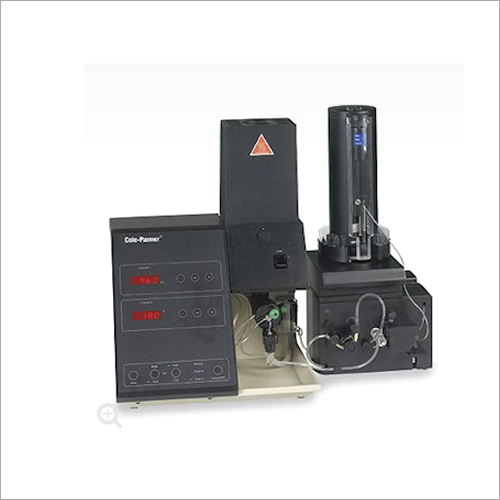
Tell us about your requirement

Price:
Quantity
Select Unit
- 50
- 100
- 200
- 250
- 500
- 1000+
Additional detail
Mobile number
Email


 Send Inquiry
Our Products
- Magnetic Stirrer
- Oil Free Vacuum Pump
- Peristaltic Pumps
- Safety Goggles
- Ultrasonic Probe Sonicator
- Flame Photometer
- Lab Digital Colony Counter
- Laboratory Muffle Furnace
- Ultra Turrax Homogenizer System
- Orbital Shakers
- Vortex Shaker
- Lab Dancer Test Tube Shaker
- Laboratory Centrifuge
- Heating Bath
- Thermostat or Circulatory Bath
- Glassware Washer
- Filter Paper
- Incubator Shaker
- Rotary Evaporator
- Wall Mount Eye Wash


Shop No. 18, GF, Mangalya Tower, Anjali Char Rasta, Vasna Road, Paldi,Ahmedabad - 380007, Gujarat, India

Mr. Kumar
(Proprietor)
Mobile :08071931976
 Send Inquiry
 Send SMS
 Call Me Free
Developed and Managed by Infocom Network Private Limited.


